Loose skin after weight loss is not a failure of effort, and it is not something that resolves with more of the work that caused it. It is the predictable result of skin having been stretched, for a long time, and then having nothing left underneath it.
This topic is also in our free guide, Is Now the Right Time?. Get it emailed to you
This page covers why it happens, how to tell whether what you are holding is skin or remaining fat, what the evidence actually supports, and how to know when it has stopped changing.
Is it skin, or is it fat?
This is the first question worth answering, because the answer changes everything that follows. Fat responds to continued weight loss. Skin does not.
A reasonable self-test: lie on your back. Fat spreads and flattens with gravity. Loose skin falls to the side as a fold and does not flatten out. Then pinch the area between thumb and forefinger — skin alone feels thin between your fingers, with no depth to it. Tissue with fat still in it feels substantial.
Most people have some of both, particularly on the abdomen, and the proportions differ by area on the same person. Arms are often skin-dominant while the lower abdomen still holds volume.
If it is fat, more weight loss will help. If it is skin, more weight loss will make it look worse, because you are removing what little is filling it.
Why skin does not always go back
Skin recovers from stretch through collagen and elastin. Both have limits. Four factors determine how much recovery you get:
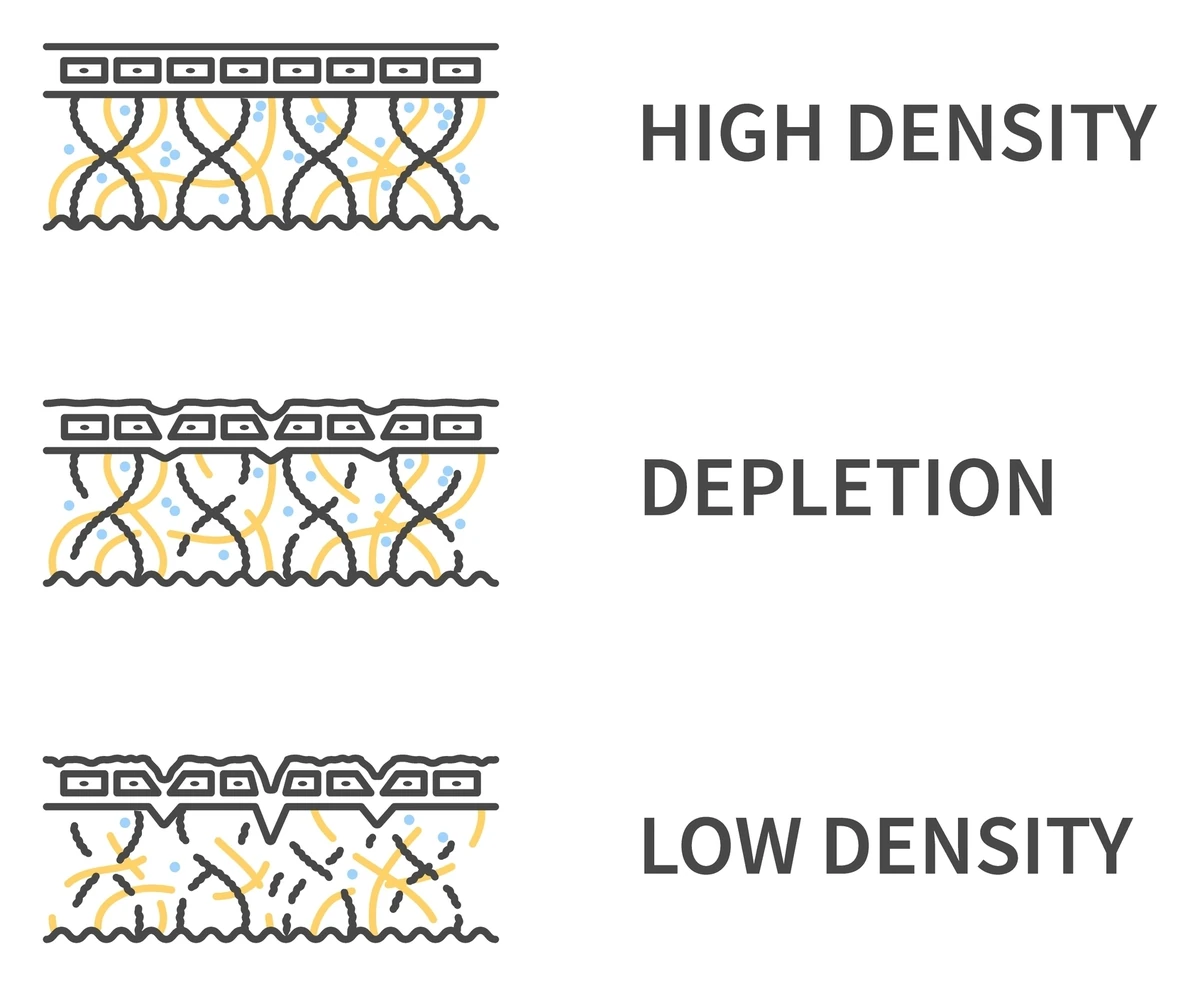
- The amount of weight lost. More weight means more surface area with nothing beneath it. Below roughly 20 kg, most people see substantial recovery. Above 40 or 50 kg, meaningful skin excess is common regardless of what anyone does.
- How long the skin was stretched. Skin held at a larger size for fifteen years has remodelled to that size. Skin held there for two years has not, and recovers better.
- Age. Elastin production declines steadily from the twenties onward, and it is not recoverable.
- Genetics, sun exposure and smoking. Smoking in particular damages collagen and elastin directly, and is the one on this list that can still be changed.
Rate of loss matters less than most sources claim. Losing slowly gives skin more time to remodel, and it is worth doing for other reasons, but it does not prevent skin excess after a large loss. People who lose 50 kg slowly still have loose skin. The magnitude and the duration matter more than the speed.
Will it improve on its own?
Yes, to a point, and the window is longer than people expect.
Skin continues to retract for months after weight stabilises. Judging the final result at three months after reaching goal weight will give you a pessimistic and inaccurate answer. Twelve months of stable weight gives you something close to the real picture.
This is the single most useful thing on this page: if your weight is still moving, what you are looking at is not the result. Wait before making decisions about it.
What the evidence supports
Resistance training. Does not tighten skin. Does add volume underneath it, which changes how the same amount of skin looks, sometimes substantially. Worth doing throughout, not started afterwards.
Adequate protein. Preserves lean tissue during weight loss, which means less volume lost from under the skin in the first place. Prevention rather than treatment.
Stopping smoking and protecting from sun. Both protect what elastic recovery remains.
Hydration, collagen supplements, topical creams, body wraps. No reliable evidence that any of these meaningfully reduce established skin excess. Some improve skin texture and appearance, which is not the same thing as reducing surface area. Anything sold on a before-and-after photograph of skin tightening warrants scepticism, particularly where the seller took the photograph.
Non-surgical tightening devices — radiofrequency, ultrasound and similar. These have a genuine but limited role in mild laxity. They do not address the skin excess that follows major weight loss. Practitioners who claim otherwise are describing a different patient to you.
The part that is rarely discussed
Loose skin after major weight loss is not only a cosmetic issue.
Skin folds trap moisture and heat. Intertrigo — inflammation within the fold — is common, recurrent, and in some cases becomes a chronic infection that does not clear. Skin can interfere with exercise, with clothing, with hygiene, and with the ability to maintain the weight loss that caused it.
This matters practically as well as medically: where excess skin is causing a documented, treated, recurring medical problem, Medicare criteria may apply to its removal. That is assessed case by case and depends on documentation built over time, which is a reason to have skin problems recorded by your GP as they happen rather than reconstructed later.
When skin removal becomes the answer
There is a point at which the weight is off, it has held, training has done what training can do, and what is left is skin. Nothing in the list above changes that. It is a surgical problem at that stage, and it is a decision with its own risks, recovery and cost.
Before that conversation is useful, three things need to be true: your weight has been stable for a meaningful period, you are not planning further weight loss, and you understand that surgery trades skin for scars.
What body contouring surgery involves →
Not sure whether you are at that point? The readiness assessment works through the timing questions.
Questions people ask
Will losing 20 kg cause loose skin? Sometimes, and usually mild. Depends far more on how long the weight was carried and on age than on the number itself.
Will I avoid it if I lose weight slowly? Slower loss helps at the margins. It does not prevent skin excess after a large loss.
Does loose skin ever go away completely? After a modest loss in a younger person, often. After a large loss, rarely.
Can exercise fix it? Exercise fills skin. It does not shrink it. The distinction is the whole answer.
For the operations themselves, Dr Kumar’s procedure guides cover each one in detail, including staging, Medicare and recovery.