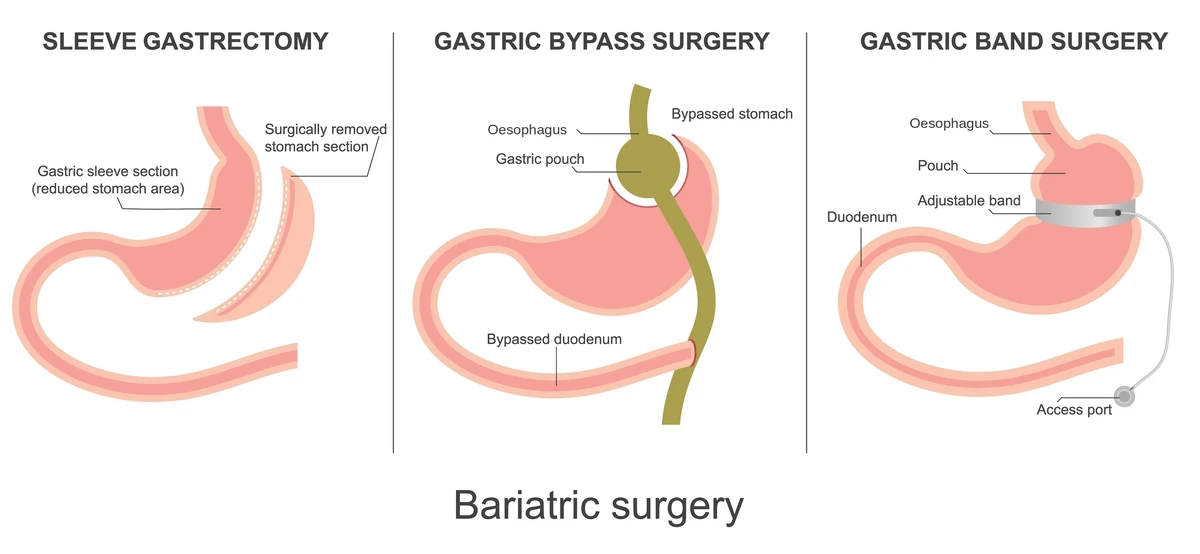
Almost all bariatric (weight-loss) surgery in Australia today is one of three operations: the sleeve gastrectomy, the one-anastomosis gastric bypass (OAGB) or the Roux-en-Y gastric bypass (RYGB). The adjustable gastric band, once common, is now rarely used. Each operation works differently and carries a different balance of weight loss, risk and long-term follow-up, so the right choice is one to make with a bariatric surgeon and your GP.
This topic is also in our free guide, Bariatric Surgery: Before and After. Get it emailed to you
This page explains the options so you can have that conversation well informed. Dr Kumar is a specialist plastic surgeon, not a bariatric surgeon, and does not recommend one operation over another. His involvement usually begins later, once the weight has come off and loose skin has become the main concern.
What Australians are having
The Bariatric Surgery Registry, run by Monash University, captured 19,599 procedures in 2023, the lowest number since 2016. Of the primary (first-time) operations, 79.8% were sleeve gastrectomies, 10.9% were one-anastomosis gastric bypasses, 8.6% were Roux-en-Y gastric bypasses and 0.7% were other procedures. The Registry’s chair linked the fall in numbers to weight-loss medication and cost-of-living pressure. Patients were 79.1% female, with an average age of 42 (Monash University, Bariatric Surgery Registry).
The sleeve gastrectomy
A sleeve gastrectomy removes the outer curve and upper part of the stomach, leaving a narrow tube that limits how much you can eat while keeping the normal outlet of the stomach (Australian Journal of General Practice, 2025). The intestine is not rerouted. It is by far the most common operation in Australia.
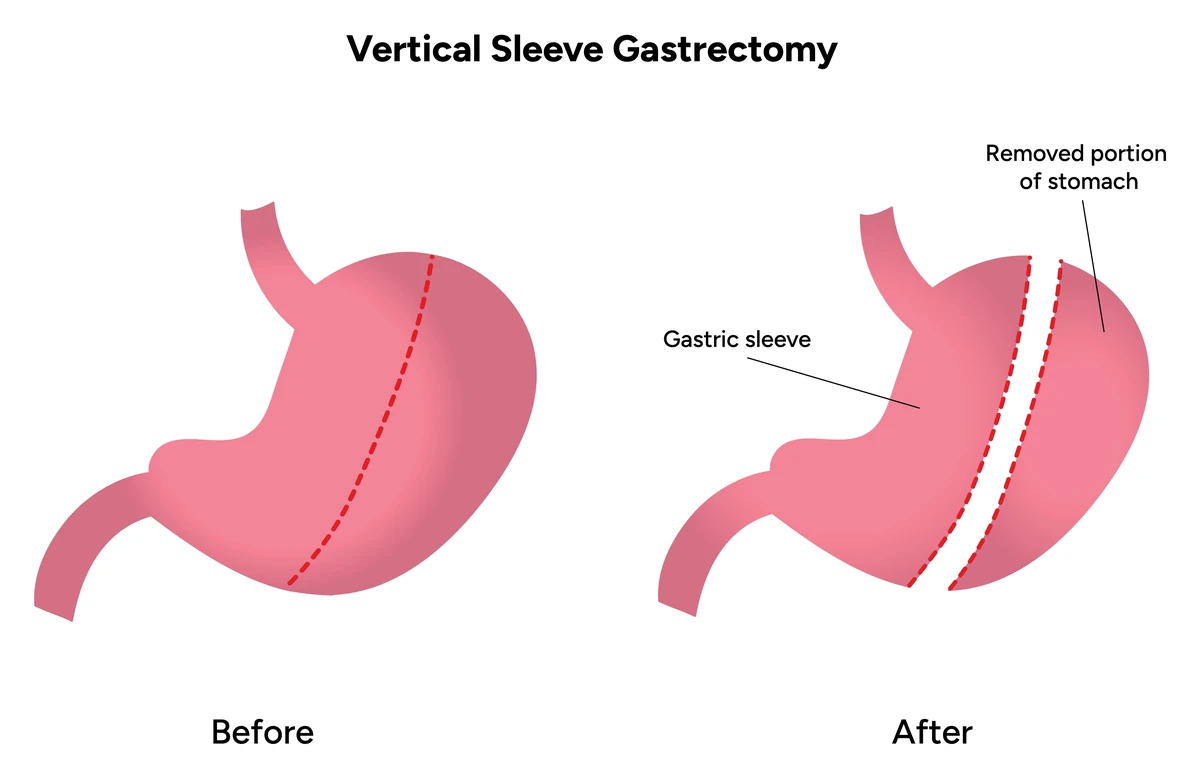
The main long-term issue is reflux. In the same AJGP review, 64% of sleeve patients needed reflux medication at 10 years, compared with 12% before surgery, and a gastroscopy is recommended at one year and then every two to three years to watch for changes in the lining of the oesophagus.
The Roux-en-Y gastric bypass (RYGB)
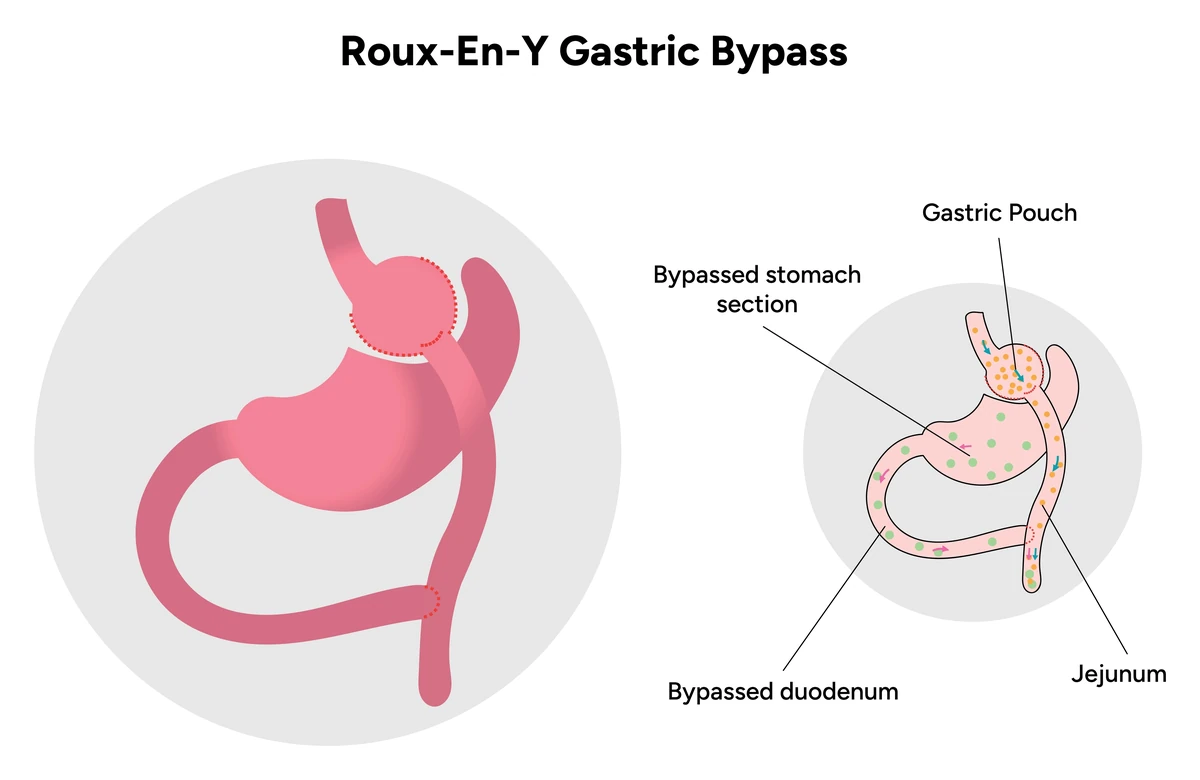
An RYGB creates a small stomach pouch and joins it to the jejunum, so food bypasses most of the stomach and the first part of the small intestine (AJGP, 2025). Fewer calories, and fewer vitamins and minerals, are absorbed, which is why lifelong supplements and blood tests are needed (healthdirect). Long-term dietary management is also needed to avoid dumping syndrome, a group of symptoms after carbohydrate-rich meals.
The one-anastomosis gastric bypass (OAGB)
The OAGB (sometimes called a mini or omega-loop bypass) is similar to the RYGB but uses a longer stomach pouch and bypasses a longer length of small intestine, with a single join (AJGP, 2025). Although it accounts for about one in nine primary operations in Australia, it is missing from many consumer guides.
A 2023 meta-analysis comparing OAGB with RYGB found slightly greater excess weight loss with OAGB at 12 months and no significant difference at five years. OAGB had fewer early complications in pooled data, but more nutritional complications such as malnutrition and anaemia, linked to the longer bypassed limb (Li et al., Obesity Surgery, 2023). Published Australian weight-loss data for OAGB on its own are limited.
The gastric band, and why it has declined
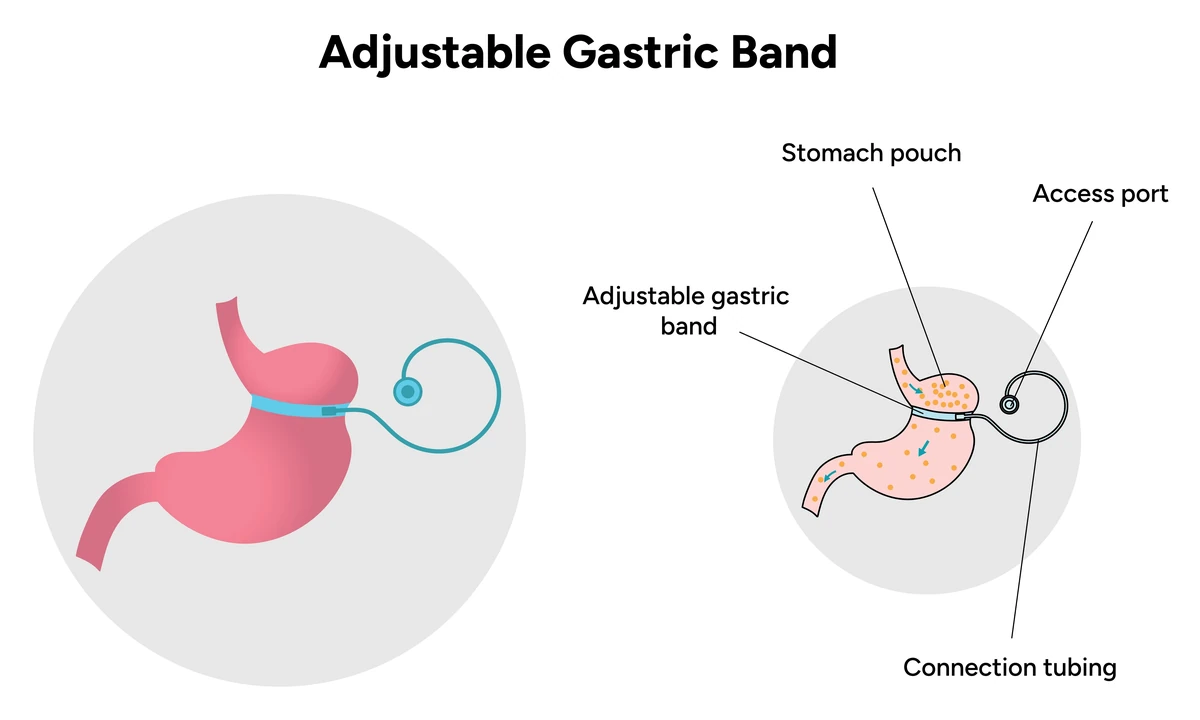
An adjustable gastric band is a ring placed around the top of the stomach to create a small pouch (healthdirect). Bands fell from 32% of Registry procedures in June 2015 to 15% a year later, a decline linked to 2013 Medicare changes affecting band adjustment and follow-up, and to surgeons moving to sleeve and bypass operations (MJA InSight+, 2017). Reported complications include reflux, pouch dilation, slippage and food blockage (AJGP, 2025). Revision surgery on an earlier operation is common: 3,614 of the 19,599 procedures captured by the Registry in 2023 were revisions (Monash University).
How much weight is lost
Across all procedures, the Registry reports average total weight loss of about 29% at one year (Monash University). Longer-term figures from the AJGP review show the usual pattern of a peak followed by some regain (AJGP, 2025):
- Sleeve gastrectomy: 28.2% total weight loss at one year, 26.5% at three years, 23.7% at five years and 23.4% at ten years.
- Roux-en-Y gastric bypass: 30.8% at one year, 29.9% at three years, 27.2% at five years and 26.9% at ten years.
These are averages. Individual results vary, and what happens after surgery depends heavily on eating, activity, follow-up and the factors covered on life after bariatric surgery.
Risks
Australian 90-day complication rates reported in the AJGP review were 1.5% for sleeve gastrectomy, 3.8% for OAGB and 4.8% for RYGB, with mortality of 0.04% for primary and 0.05% for revision procedures (AJGP, 2025). General risks include bleeding, infection and vitamin deficiencies, and healthdirect advises stopping smoking at least six weeks before surgery (healthdirect). Your bariatric surgeon will explain the risks that apply to you.
Who is eligible
healthdirect describes surgery as usually offered at a BMI over 40, or over 35 with serious health problems such as diabetes or heart disease (healthdirect). The 2022 international ASMBS/IFSO guidelines, endorsed by ANZMOSS, lower these thresholds: a BMI of 35 or more regardless of other conditions, or 30 or more with type 2 diabetes (ASMBS/IFSO, 2022). Your GP is the right starting point, and a referral to a bariatric surgeon will lead to an individual assessment.
If you have private health insurance, check your level of cover early. “Weight loss surgery” is a mandatory clinical category only on Gold hospital cover, and the government definition of that category includes removing excess skin due to weight loss (privatehealth.gov.au). More on this is on costs and funding.
What it means for your skin later
Whichever operation you have, losing around a quarter to a third of your body weight often leaves loose skin, because skin that has been stretched for years may not shrink back fully. In a Swedish study of people after bariatric surgery, 91% of women and 67% of men felt their body looked unattractive because of excess skin (Obesity Surgery, 2013).
Skin surgery is typically considered once weight has been stable for some months, often 12 to 18 months after the bariatric operation (Giordano, Open Access Surgery, 2015). The nutritional deficiencies that can follow bypass operations also matter, because they affect wound healing. See when is the right time for skin removal and loose skin after weight loss, and for the operations themselves, Dr Kumar’s surgical website.
Where to next
- Bariatric surgery hub
- Life after bariatric surgery: the first five years
- Nutrition after bariatric surgery
- Working with your GP
If you are still deciding on bariatric surgery, start with your GP. If you have already had surgery and want to understand what comes next for your skin, take the readiness assessment or book a consultation with Dr Kumar once your weight has settled.
Sources
- Monash University: Fewer Australians having bariatric surgery (Bariatric Surgery Registry)
- Shilton H. Bariatric surgery. Australian Journal of General Practice 2025;54(4)
- Li X et al. OAGB versus RYGB: meta-analysis. Obesity Surgery 2023;33(2):611–622
- MJA InSight+: Lap-bands on decline but still key Australian option (2017)
- healthdirect: Guide to bariatric surgery
- healthdirect: Gastric bypass surgery
- ASMBS/IFSO: Indications for metabolic and bariatric surgery (2022)
- ANZMOSS
- privatehealth.gov.au: Product tiers and clinical categories
- Excess skin after bariatric surgery: Swedish cohort. Obesity Surgery 2013
- Giordano S. Removal of excess skin after massive weight loss. Open Access Surgery 2015;8:51–60