When you lose a large amount of weight, not all of it is fat. Some is lean mass, including muscle, and how much you keep depends largely on two things you control: how much protein you eat and whether you do regular resistance training. Published guidance suggests protein needs during active weight loss are higher than the standard adult recommendation, though the right target for you is one to set with a dietitian or GP.
This topic is also in our free guide, Losing Weight Well. Get it emailed to you
Why lean mass matters
Muscle is what lets you climb stairs, carry shopping and stay active as you age. healthdirect notes that loss of muscle mass can lead to weakness, frailty, falls and fractures, and that it is prevented by eating enough protein and doing regular exercise, especially resistance training (healthdirect).
Muscle also matters for the way your body looks once the weight is off. Muscle under the skin gives shape to the arms, chest, buttocks and thighs. If a large share of the weight lost is muscle, you are left smaller but softer, with skin that has less underneath it. And if body contouring surgery is part of your plans, better strength and nutrition put you in a stronger position for recovery (see preparing your nutrition before body contouring surgery).
How much of the weight lost is muscle?
It varies with the method, the speed of loss and what you do alongside it. In a body-composition substudy of one large trial of a newer weight-loss medicine, about 75% of the weight lost was fat and about 25% was lean mass (Look et al., Diabetes, Obesity and Metabolism, 2025). “Lean mass” on these scans includes water, organs and other non-fat tissue, so it is not all skeletal muscle. Even so, lean mass loss is a recognised part of rapid weight loss, and Australia’s obesity management algorithm recommends resistance exercise to help protect muscle (Australian Diabetes Society, 2026). The medication-specific detail is on muscle loss on weight-loss medication.
How much protein?
There is no single figure that suits everyone, and targets for people losing a large amount of weight are less settled than the standard recommendations. These are the published reference points:
- Standard Australian recommendation. The Nutrient Reference Values set the recommended dietary intake at 0.84 g per kilogram of body weight per day for men aged 19–70 and 0.75 g/kg for women, rising to 1.07 g/kg and 0.94 g/kg respectively over 70 (NHMRC Nutrient Reference Values). These are set for healthy people at a stable weight.
- During active weight loss. A 2025 joint advisory from four US nutrition and obesity societies notes that higher targets of 1.2–1.6 g/kg per day have been proposed during active weight reduction, and that an absolute target of 80–120 g per day is an alternative approach (American Journal of Clinical Nutrition, 2025).
- Around body contouring surgery. A review of excess-skin surgery after massive weight loss gives a peri-operative protein goal of 70–100 g per day (Giordano, Open Access Surgery, 2015).
For people with a high body weight, a target based on total weight can overestimate need, which is one reason guidance also uses absolute amounts or targets based on lean mass. Kidney disease and some other conditions change what is safe, and after bariatric surgery your surgeon’s program will set its own protein goals. Use the protein calculator on the biometrics page as a starting estimate, then confirm it with your dietitian or GP.
Getting it in when you are eating less
Reaching a protein target is harder when appetite is low, whether because of medication or a smaller stomach after surgery. Practical approaches dietitians commonly use include:
- Eating the protein part of each meal first.
- Spreading protein across three or more meals rather than relying on one large serve.
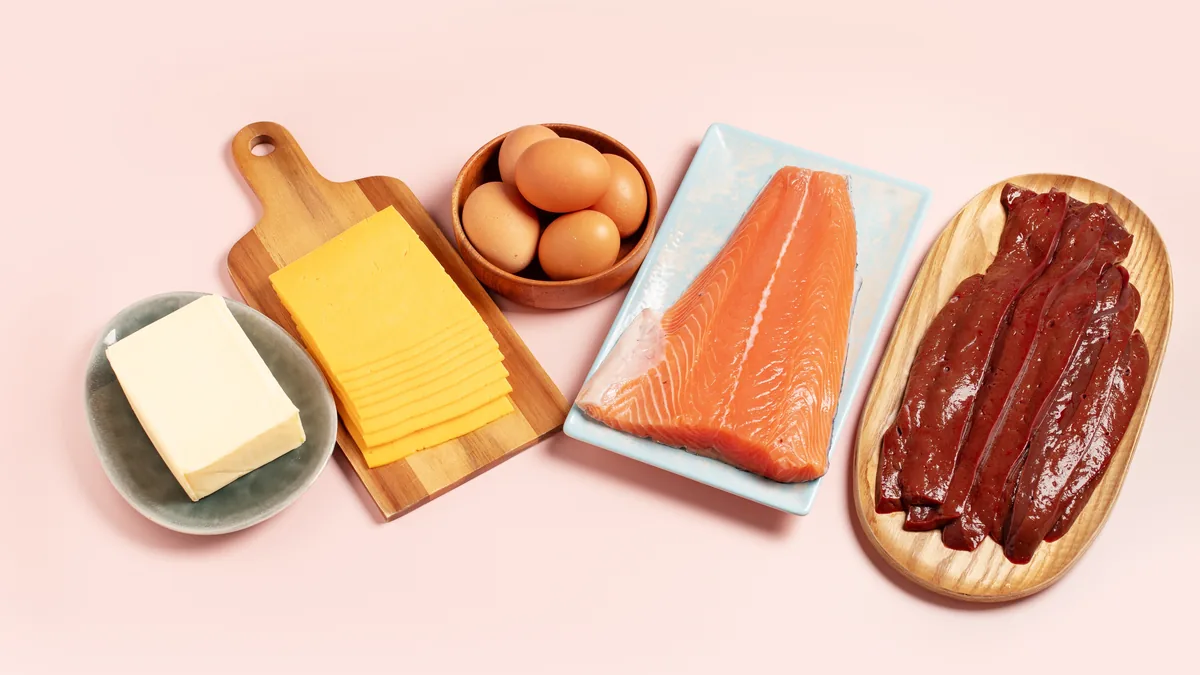
- Choosing compact sources such as eggs, Greek yoghurt, cottage cheese, fish, lean meat, tofu and legumes.
- Using a protein supplement where food alone falls short, on a dietitian’s advice.
Resistance training
Protein supplies the building material; resistance training is the signal to keep using it for muscle. Australia’s physical activity guidelines recommend muscle-strengthening activities on at least two days each week, alongside 2.5 to 5 hours of moderate activity (Department of Health). The 2025 US advisory suggests strength training at least three times a week during treatment with weight-loss medication (American Journal of Clinical Nutrition, 2025).
You do not need a gym to start. Squats to a chair, wall push-ups, step-ups and resistance bands all count, and the load can increase as you get stronger. If you have joint problems, heart disease or have recently had surgery, check with your GP first, and consider an accredited exercise physiologist. Keeping muscle while you lose weight has more on structuring the week.
Measuring what you are losing
Scales cannot tell fat from muscle. A DEXA scan with a body-composition report measures both, so repeated scans can show whether your lean mass is holding up. Body-composition DEXA is not covered by Medicare (Macquarie Medical Imaging). Simpler checks, such as grip strength, how your clothes fit and how your training loads are progressing, are also useful.
Working with a dietitian
An Accredited Practising Dietitian can set a protein target that reflects your weight, health conditions, medications and any surgery, and adjust it as you go. Dr Kumar’s patients work with Amy Kellner APD, who consults by telehealth anywhere in Australia. See the nutrition hub for the related guides.
Where to next
- Muscle loss on weight-loss medication
- Keeping muscle while you lose weight
- Nutrition after bariatric surgery
- Biometrics and protein calculator
If you are still losing weight, the readiness assessment will show where you stand. If your weight has settled and loose skin is now the main issue, book a consultation with Dr Kumar.
Sources
- healthdirect: Loss of muscle mass
- Look M et al. Body composition changes during weight reduction (SURMOUNT-1 DXA substudy). Diabetes Obes Metab 2025
- Australian Diabetes Society: Australian Obesity Management Algorithm (January 2026)
- NHMRC: Nutrient Reference Values for Australia and New Zealand, Protein
- ACLM, ASN, OMA and TOS. Nutritional priorities to support GLP-1 therapy for obesity: a joint advisory. Am J Clin Nutr 2025;122:344–367
- Giordano S. Removal of excess skin after massive weight loss. Open Access Surgery 2015;8:51–60
- Department of Health: Physical activity guidelines for adults 18 to 64 years
- Macquarie Medical Imaging: DEXA information sheet